
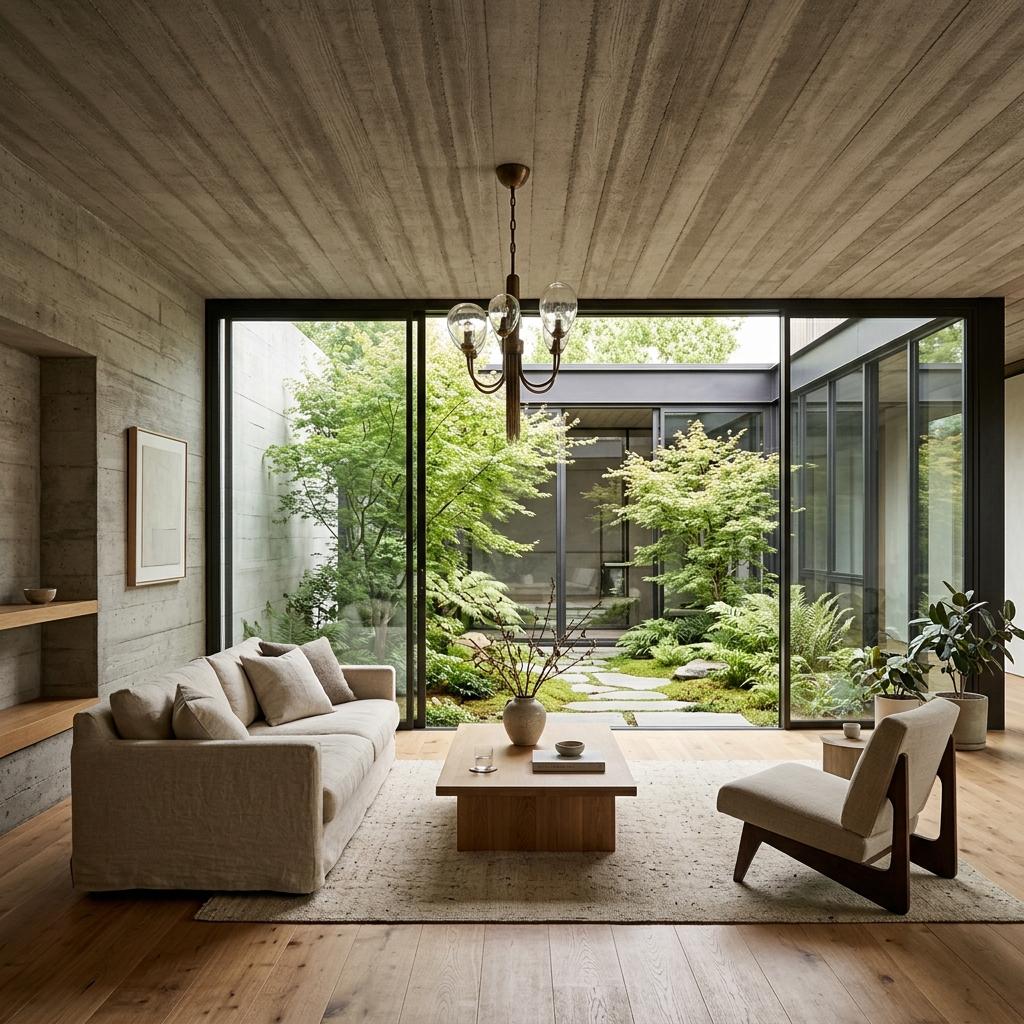
On restraint in residential architecture
The hardest thing to do in a residential commission is not to add — it is to stop.
Most clients arrive with a list of wants. Some of those wants contradict each other. Some are residual ideas from a Pinterest board saved three years ago. Some are genuinely essential. The architect's job is to understand which is which, and to protect the project from everything that isn't.
Restraint, in this context, is not minimalism as an aesthetic. It is something more structural. It is the decision to leave a wall unbroken even though the client would like another window. It is the decision to repeat a material through a house rather than introducing variety for its own sake. It is the decision to spend money on the quality of a concrete finish rather than on a feature element that will date.
The buildings I admire most don't announce what they've left out. You simply notice, after spending time in them, that nothing feels unnecessary. That is a harder thing to achieve than it looks — and it requires a degree of confidence that is difficult to sustain when a client is asking why there isn't more.
— Estilo Interior